Needle Bearing Retainers
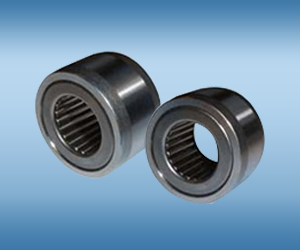
Custom Needle Bearings
Hartford Technologies manufactures custom needle bearings and needle roller bearing assemblies for OEM applications that require high load capacity, compact design, and repeatable performance at production scale.
Needle bearings use long, cylindrical needle rollers rather than balls as the rolling elements. Because the theoretical contact is a line rather than a point, needle roller bearings can support greater radial loads than many ball bearing designs while maintaining a low profile.
Hartford supports custom needle bearing programs for automotive, agricultural, industrial, electronics, and medical applications, with US engineering support, prototype development, global manufacturing flexibility, and documented quality systems.

Custom Needle Bearing Designs Hartford Supports
Hartford produces a wide variety of needle roller bearing designs depending on load requirements, available radial space, shaft and housing geometry, installation method, and production environment.
Common needle bearing and needle roller assembly options include:
- Caged needle bearings using a cage, separator, or retainer to space and guide the rollers
- Full-complement needle bearings that use the maximum number of rollers for higher load capacity
- Plastic molded retainers combined with bearing-grade steel rollers
- Metal stamped cages with chrome steel needle rollers
- Machined cages or retainers for specialized assembly requirements
- Needle roller assemblies designed for radial loads where a compact profile is required
In some designs, the cage or retainer controls roller spacing. In full-complement needle bearing designs, the rollers may be held in place by grease, a temporary plug, or by their close proximity and geometry until the bearing is assembled onto the shaft.
When to Use a Needle Bearing
A needle roller bearing is often specified when an application needs high radial load capacity in a compact space. Compared with ball bearings, needle bearings use line contact between the roller and raceway, which helps distribute load across a larger contact area.
Needle bearings are commonly used when an application requires:
- High radial load capacity
- A low-profile bearing design
- Efficient torque transmission
- Reduced friction in compact assemblies
- Performance under static loads, low speeds, or oscillating motion
- A bearing design that can be integrated into an OEM assembly
Hartford manufactures needle bearings for radial loads that demand a low profile and are exceptionally easy to install.
Applications for Custom Needle Bearings
Hartford supplies needle roller bearing assemblies for demanding OEM applications where reliability, fit, and production repeatability matter.
Common applications include:
- Automotive steering systems
- Automotive seating systems
- Drive shafts
- Off-highway equipment
- Oil patch equipment
- Agricultural equipment
- Outboard engines
- Air compressors
- Electronics products
- Medical devices
For high-load applications involving static loads, low speeds, or oscillation, a needle roller bearing may provide the right combination of compact size and load-carrying performance.
Bearing Assembly Proof for OEM Programs
Hartford’s needle bearing capabilities are part of a broader custom bearing assembly platform built for OEM programs that need engineering support, manufacturing repeatability, and documented quality.
Related Hartford case studies show how the team supports custom bearing assembly, automotive, and engineered production programs:
Need a Custom Needle Bearing for an OEM Program?
Hartford’s bearing engineering team can review your application requirements, including load, shaft and housing dimensions, cage or retainer needs, material considerations, annual volume, and quality documentation requirements.
For the fastest response, include drawings, target dimensions, application details, production volume, and any APQP, PPAP, or certification requirements.
How Hartford Controls the Needle Bearing Manufacturing Process
Hartford combines US engineering control with global manufacturing flexibility. The goal is to give OEMs offshore cost advantages without losing engineering access, quality oversight, or production accountability.
1. Application Review
Hartford starts by reviewing the bearing application, load requirements, shaft and housing dimensions, operating environment, production volume, and documentation needs.
2. Design and Prototype Support
Hartford’s engineering team supports design recommendations, prototype development, and pre-production planning so the bearing assembly is built around the real application, not just a catalog fit.
3. Program Qualification
For OEM and automotive programs, Hartford can support APQP, PFMEA, PPAP, and SPC requirements before the program moves into full production.
4. Production Oversight
Hartford operates manufacturing in North America and Asia, but programs are owned, qualified, and overseen through Hartford’s engineering and quality systems. The model is designed to combine cost-effective production with US-led technical support and quality control.
5. Inspection, Traceability, and Delivery
Finished parts are supported by dimensional inspection, quality verification, and lot traceability from raw material through finished product.
Engineering, Prototype, and Production Support
Hartford Technologies bearing design engineers are among the most knowledgeable in the industry. The team supports custom needle bearing programs from early design review through prototype development, pre-production parts, tooling, and full production.
Hartford’s ability to manufacture on both sides of the globe gives customers an advantage in cost, capacity, and flexibility. Prototype and manufacturing operations are geared for fast turnaround and can support major OEM programs with stringent delivery requirements.
Hartford is best suited for engineered bearing programs, OEM applications, and production-volume requirements where technical support, repeatability, and quality documentation matter.
Quality Systems for Needle Bearing and Bearing Assembly Programs
For OEM bearing programs, quality control is not just a final inspection step. Hartford’s quality process is built around defect prevention, repeatability, and traceability.
Hartford follows Automotive Industry Action Group standards for Advanced Product Quality Planning, and its APQP process is applied to new and recurring ball and bearing programs. This process supports design recommendations, rapid prototyping, pre-production parts and tooling, and full production.
Hartford’s quality assurance system covers material integrity, manufacturing tooling, and the accuracy of inspection and measurement instruments. Available inspection and testing capabilities include:
- Coordinate measuring machines
- Laser micrometers
- Circular geometry gauges
- Bore gauges
- Height gauges and calipers
- Rockwell hardness testing
- X-ray inspection
- Optical comparators
- Tensile testing
- ICP plasma spectrometer chemical analysis
- Salt spray testing
- Profilometer surface finish testing
- Microstructure examination
- Failure analysis
- Noise testing
Hartford Technologies is ISO 9001, ISO 14001, IATF 16949, and WBENC certified. Products are fully traceable from raw material through finished products.
What to Include in Your Needle Bearing RFQ
To help Hartford evaluate your custom needle bearing application, include as much of the following information as possible:
- Application or equipment type
- Load requirements
- Speed or oscillation requirements
- Shaft and housing dimensions
- Available radial space
- Cage, retainer, or full-complement preference
- Material requirements or operating environment
- Annual production volume
- Prototype or pre-production needs
- Required documentation, such as APQP, PPAP, SPC, or certification requirements
- Drawings, prints, or CAD files if available
Hartford’s team can help review the requirements and recommend the best path for a custom needle bearing or related bearing assembly.
Frequently Asked Questions About Needle Bearings
What is a needle bearing?
A needle bearing, also called a needle roller bearing, uses long cylindrical rollers instead of balls as its rolling elements. The term “needle” typically means the roller length is several times greater than the roller diameter.
What is the advantage of a needle bearing?
Needle bearings can provide high radial load capacity in a compact design. Because the contact between the roller and raceway is a line rather than a point, needle roller bearings can support greater loads than many ball bearing designs with similar radial space.
What is the difference between a caged needle bearing and a full-complement needle bearing?
A caged needle bearing uses a cage, separator, or retainer to space and guide the rollers. A full-complement needle bearing uses the maximum number of rollers and is often used when higher load capacity is required.
What applications use needle bearings?
Needle bearings are used in automotive steering and seating systems, drive shafts, agricultural equipment, off-highway equipment, oil patch equipment, outboard engines, air compressors, electronics products, and medical devices.
Does Hartford manufacture custom needle bearings?
Yes. Hartford manufactures custom needle bearing and needle roller bearing assemblies for OEM applications. Designs may include plastic molded retainers, metal stamped cages, machined retainers, chrome steel needle rollers, bearing-grade steel rollers, and full-complement configurations depending on the application.
Is Hartford a needle bearing supplier or a custom bearing manufacturer?
Hartford is best suited for custom bearing assemblies, engineered needle bearing programs, and OEM production requirements. The team supports applications where design input, prototype development, quality documentation, and repeatable production are important.
What information is needed to request a quote?
The most helpful information includes drawings, application details, load requirements, shaft and housing dimensions, operating environment, annual volume, and any documentation requirements such as APQP, PPAP, SPC, or certification needs.